

Side sleeping is supposed to be the good position. My physical therapist told me years ago that it takes pressure off the spine, and I believed her. What nobody mentioned is what it does to your knees. You stack one leg on top of the other, the top knee slides forward and down, and by four in the morning the right one is throbbing. Mine has mild to moderate osteoarthritis, worse on the right side, diagnosed about six years ago, and mornings were the tell. I would swing my legs out of bed and sit there a second before standing. I tried a regular bed pillow between my knees. It worked for about an hour and then slid onto the floor. That is when I started reading about the Contour Legacy leg and knee pillow, and eventually bought one.
Here is what I settled on after months of nightly use, and what I would tell a friend across the kitchen table. It is not a medical device and it will not fix arthritis. What it does is keep your knees from pressing on each other and keep your hips closer to level while you sleep. For me that meant fewer three in the morning wake-ups and an easier first step down the stairs. I still do my exercises most days. I still check in with my physical therapist now and then. This pillow is one piece of the answer, not the whole answer, and anyone who tells you otherwise is selling something.
The gap between your knees is the whole problem
The Contour Legacy leg and knee pillow is soft memory foam with a washable cover, measured at ten inches long and nine and a half inches wide. Read the reviews from people with the same ache before you decide.
Amazon Check Today's Price on Amazon →Stops your top knee from landing on your bottom knee
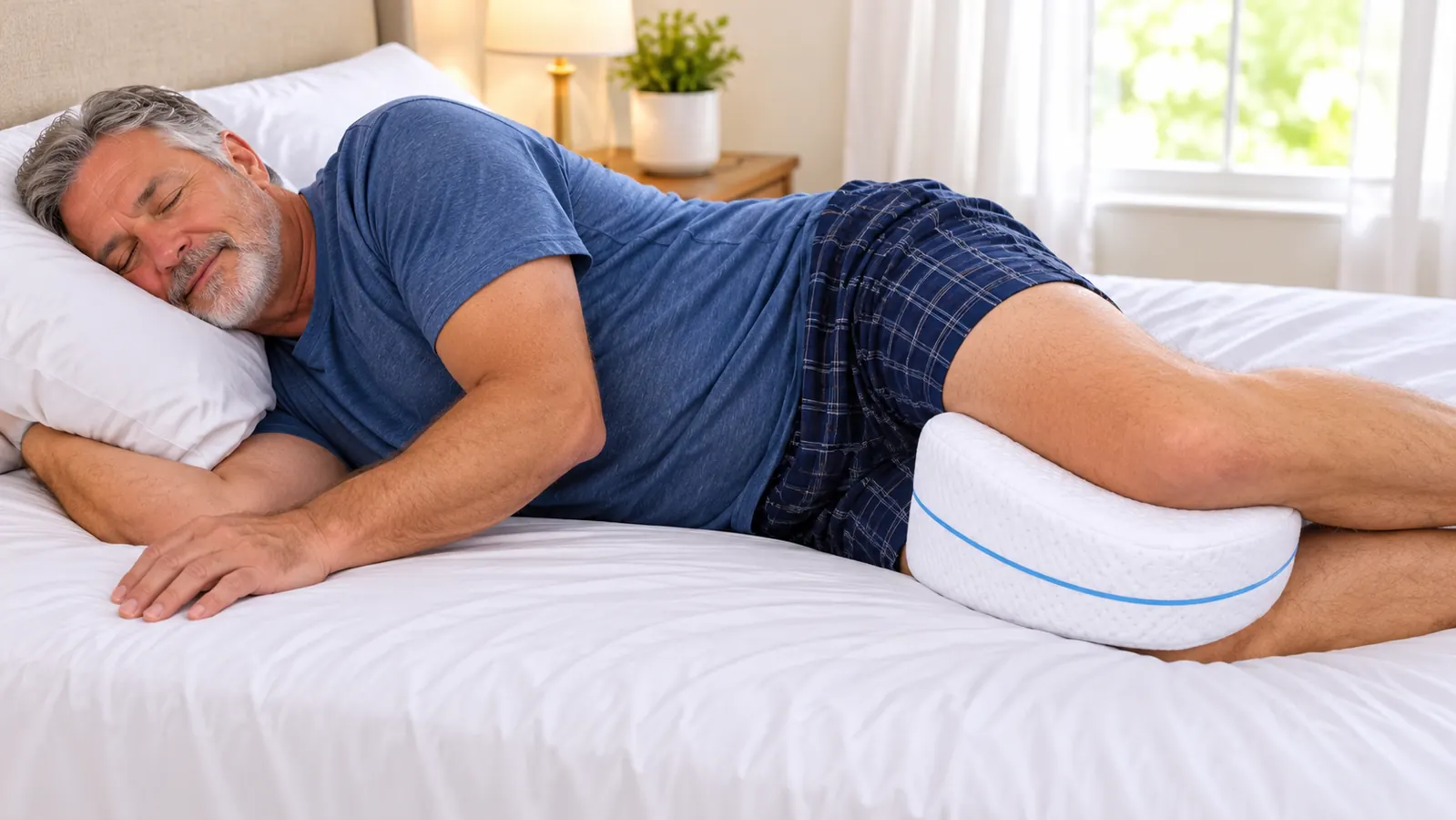
When you sleep on your side, your top leg slides forward and drops. The top knee lands on the inside of the bottom knee, and that pressure sits there for hours. The Contour pillow goes between the legs so the top knee rests on foam instead of on bone. I noticed it the first night, mostly because I did not wake up wanting to move my legs. That is the plain version of what it does. It separates the knees, and the rest of the comfort follows from there.
Keeps your hips from twisting all night
A stacked-leg position rotates your pelvis forward. That is where a good deal of the morning lower back ache comes from in my experience. The pillow holds the top leg at roughly the height of the bottom one, which keeps the pelvis closer to square. I am not going to tell you my hips stopped hurting entirely, because they did not. But the sharp catch on the right side when I rolled over quieted down after about a week of consistent use.
Takes the twist out of your lower back
The listing mentions back support and sciatica, and I read that part skeptically at first. What I can say is that position matters. When my knees are not stacked, my lower back is not twisted, and a twisted back at three in the morning is usually what wakes me up. If your back pain comes from a disc or a pinched nerve, this will not touch it. Ask your doctor which kind you have before you spend anything on a pillow, because the answer changes what helps.
Holds its shape so the pillow stays where you put it
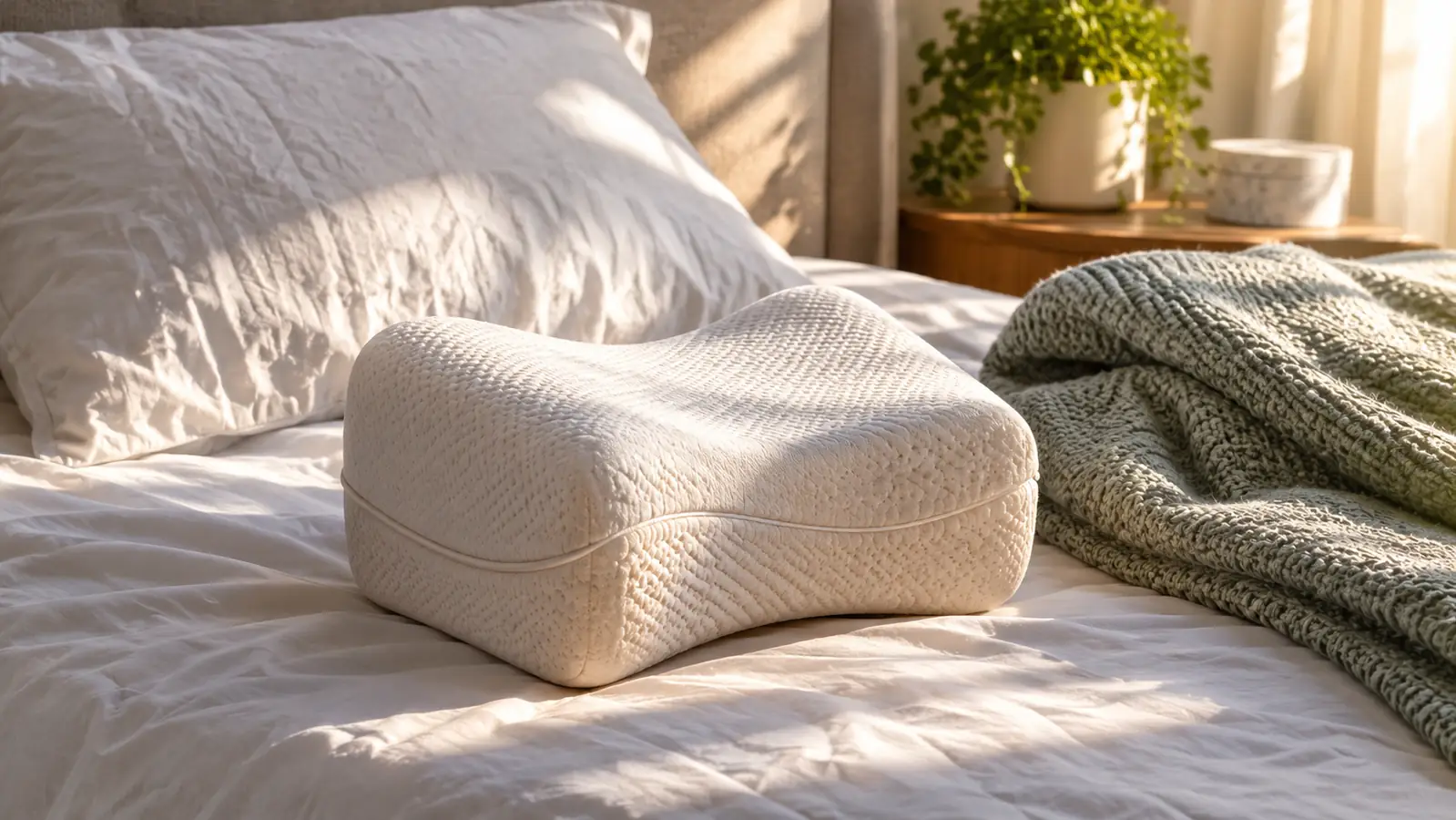
One thing I did not expect: the foam holds the shape of the gap between my legs, so I can shift a little without the pillow sliding out. A regular bed pillow flattens and creeps away by midnight, and then you wake up with your knees touching again. This one is soft, but it comes back. It is ten inches long and nine and a half inches wide, so it sits where I put it. I still knock it out of the bed now and then when I roll over, just far less often.
The foam pushes heat away instead of trapping it
The foam is built to push heat outward, and I was ready to call that marketing. I sleep warm. What I noticed is that my legs did not get that clammy feeling I get with a cotton pillow. The cover is 62 percent polyester and 38 percent lyocell, which feels cooler against the skin to me. It is not air conditioning. It is just less of a hot spot between two legs for eight hours, and in July that turned out to matter more than I expected.
Soft enough to fall asleep on, firm enough to still be there at 3 a.m.
The firmness is described as soft, and that is accurate. It is memory foam, so it gives under the knee and then supports. If you want something stiff and orthopedic, this is not that, and I would not pretend otherwise. I needed soft, because a hard wedge under my knee made my hip ache worse. The tradeoff is that foam does not last forever. Mine has held its shape through months of nightly use, and there is a one year manufacturer warranty behind it.
Small enough to survive a shared bed
My bed is a queen and my husband Gene is seventy and a light sleeper. A full length body pillow between us was never going to survive in this house. This one is small, about the size of a loaf of bread, and it stays on my side of the mattress. Gene has not complained once, which for him counts as a review. If you share a bed and already gave up on a long pillow, this is the reasonable compromise, and nobody has to reorganize the bedroom.
Light enough to move with one hand in the dark
It weighs 198 grams, roughly seven ounces. That sounds like a footnote until you are half asleep at two in the morning and need to move it. I can shift it with one hand without turning on a lamp. When I get up in the night, I do not have to wrestle it back into position before I lie down again. Small thing. It matters more than you would guess, especially if you are getting up more than once a night.
A washable cover, because you use it every single night
The cover is washable, which is the feature I care about most in anything I use every night. You sweat. Foam goes stale. I wash mine every couple of weeks on a gentle cycle and let it air dry flat. Read the care label yourself before you do it, because I am not going to be responsible for your dryer. A pillow you cannot clean is a pillow you end up replacing out of disgust, and that is how you buy the same thing twice.
A smaller experiment than a new mattress
Before I bought this, I had started reading about mattress toppers, wedge systems and all the rest of it. This was the smallest step in that chain, and I could test it for a few weeks before deciding anything bigger. That is the honest case for it. Start small. If separating your knees helps you at all, you will know within a week. If it does not, you are out one pillow and you have learned something useful about your own body.
What I'd Skip
Things I would skip, having tried most of them. The long body pillow, which was too much in a shared bed and did not stay put anyway. The hard wedge under the knee, which pushed my hip out of line and made the morning worse. The strap-on versions that turn your legs into a project at bedtime, because anything with buckles is a thing you stop using by week two. And any product promising to cure arthritis, including this one. The Contour pillow is a positioning tool. It holds your knees apart so your hips and back sit closer to neutral.
One more thing I would skip: buying anything at all before you know what is causing the ache. Knee pain has a lot of sources, and a pillow only helps the kind that comes from how you lie. Check with your doctor or physical therapist first, then decide whether a piece of foam is worth trying. That is not a hedge. It is the order I wish I had done things in.
By the fourth night I stopped waking up to move my knees apart. That is the whole review, honestly.
Start with the smallest change first
Check today's price and the return policy on the Contour listing, use it for two weeks, and see whether separating your knees changes how you wake up. Then talk to your doctor or physical therapist about the pain itself.
Amazon Check Today's Price on Amazon →